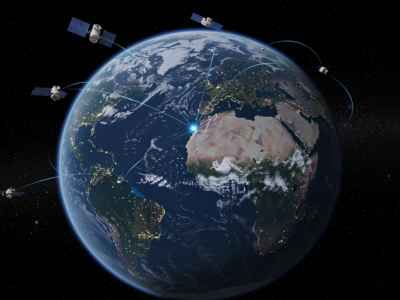

The global aerospace landscape is undergoing a massive, irreversible structural shift. For decades, celestial exploration and orbital deployment operated within rigid, centralized government frameworks. Today, navigating advanced astronomical technology demands a far more dynamic approach to financing and launch execution. A major turning point is unfolding as commercial enterprises align their operational capabilities with modern capital markets. This historic shift is placing an advanced, highly adaptive commercial space industry at the center of corporate boardrooms worldwide. By replacing old cost-plus setups with fluid, private launch networks, industrial giants are securing long-term cost stability. These innovative launch systems allow corporate leaders to reduce payload costs while ensuring their systems remain globally competitive.
SpaceX IPO 2026 Drives Growth Across the Commercial Space Industry
The commercial market for orbital launch alternatives within the United States is expanding rapidly as corporate buyers demand price certainty. This massive upward growth trend shows that top American corporations are shifting toward private space exploration to deploy complex constellations. By integrating high-efficiency satellite arrays and robust communication systems into their regional supply chains, U.S. technology hubs are optimizing global data distribution. Because meeting the immense data demand of emerging computing facilities is highly critical across North America, the U.S. satellite launch vehicle market is expanding aggressively via reusable rocket technology.
Currently, the country holds its dominance through having a prominent stake in global aerospace technology innovations, serving as a huge accelerator of capital investments. Federal policy supports this dominance. Indeed, the United States government has openly made a commitment to the expansion of a competitive commercial launch market in order to further launches.
How the SpaceX Trillion-Dollar IPO Is Reshaping Space Stocks
Succeeding with modern aerospace investments requires corporate groups to look far beyond simple heritage government contracts. Relying unthinkingly on legacy defense programs can create severe structural delays and compromise competitive returns. True corporate positioning requires a structured assessment of space investment trends that respect private market efficiency. This is exactly where the confidential filing of SpaceX's S-1 registration changes how Wall Street values public space companies. Instead of viewing the sector as a niche scientific playground, institutional investors now recognize its immense commercial viability.
The development is indicative of larger structural shifts. The findings from U.S. government research indicate that the commercial space sector has evolved to be worth many billions of dollars for supporting communications, logistics, and defense activities. This significant valuation benchmark helps in putting other competitors through a new rating process.
Starfighters Space Expands Microgravity and Supersonic Flight Capabilities
The absolute biggest hurdle for modern commercial scale involves managing complex testing profiles safely across multiple distinct departments. Many executive teams end up stuck because their current hardware lacks immediate domestic flight availability. To solve this bottleneck, Florida-based Starfighters Space, Inc., signed a strategic agreement with Mu-G Technologies, LLC. This collaborative initiative focuses entirely on designing and scaling trusted flight platforms for advanced environmental testing. By combining a flying supersonic fleet with a newly integrated Falcon 50 aircraft, this group helps clear a smooth path for domestic microgravity testing services. It bridges the gap between raw aerospace design and everyday corporate engineering requirements.
NASA Microgravity Research Demand Creates New Commercial Opportunities
Upgrading complex electronic components and biological systems traditionally required spending years waiting for rare spots on the International Space Station. These restricted schedules often fail because they do not give commercial enterprises the rapid testing iterations required for agile development. The introduction of domestic private parabolic flight services turns the entire concept of this antiquated testing upside down. Targeted NASA microgravity experiments guarantee that drug manufacturers and materials science laboratories will be able to explore fluid dynamics free from the influence of gravitational settlement. This ability enables companies to develop an efficient procedure for managing the tail end of space technologies of tomorrow.
Defense, Satellite, and Hypersonic Space Companies Gain Investor Attention
When you are managing a major national security platform, you cannot afford to let unverified hardware face unmitigated operational risks. The newest corporate safety models eliminate this deployment risk by securing high-value defense space contracts that protect critical systems. Industry leaders like Karman Holdings have been recording unprecedented revenue levels due to their ability to provide cutting-edge technologies related to missile defense. The strong industrial channels facilitate a situation where the defense systems can be validated in very tough conditions of air flight. In order for an automation system to be validated, the system must comply with various parameters of reliability and durability tests.
Space Sector ETFs and Public Companies Rally Ahead of SpaceX Listing
Investing in overly rigid telecom assets frequently results in slow adaptation speeds and massive operational friction for global enterprises. Forward-thinking executives are quickly moving away from entirely land-based setups and embracing the rapid growth of the global satellite communications market. This strategic shift is perfectly visible across major exchanges as space sector ETFs experience a historic wave of inbound institutional interest. Such a change helps the incumbent players, such as Viasat and EchoStar, to manage their assets in orbit by using valuable spectrum swaps. Such an environment creates a wonderful playing field for the publicly held firms.
Autonomous Space Technologies and Orbital Infrastructure See Rising Investment
Supercharging your daily organizational productivity requires a unified corporate strategy where communication spending effortlessly matches evolving digital capabilities. Modern infrastructure development achieves this by routing corporate capital directly into resilient, autonomous space systems that operate independently. These high-level systems employ sophisticated orbital infrastructure in order to ensure reduced latency when working with enterprise applications throughout the world. Systems for space control are able to ensure security from orbiting threats while also ensuring constant connection within the different parts of the globe that require the transfer of information between segments.
Future Outlook for the Global Commercial Space Economy
At the national level, this transition is already underway. U.S. space policy and NASA strategy are actively shifting toward a commercially driven ecosystem, where private companies lead innovation, infrastructure deployment, and long-term space economy growth. The rapid evolution of independent orbital launch production points directly toward a future defined by completely privatized space networks. Transitioning to integrated, modern telecom arrays allows corporate directors to secure total control over their long-term data liabilities.
By securing your business strategies within the larger commercial space strategy currently, your business will have no problem maneuvering through this new industrial age. The past age where the sole use of restricted government launching platforms was necessary is officially coming to an end. With this, there is now a very lucrative road ahead for private constellations that will provide the power for global commerce logistics.