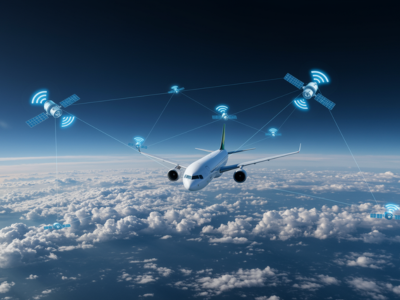

The recent Amazon–Delta in-flight WiFi agreement is reshaping competition within the aviation connectivity market. Amazon’s Project Kuiper has secured a significant contract to provide satellite-powered broadband to 500 Delta Air Lines aircraft beginning in 2028. This partnership represents Amazon’s second major airline contract and intensifies its competition with Elon Musk’s Starlink, which currently leads the expanding market for next-generation satellite WiFi.
Delta selected Amazon’s low Earth orbit service following months of technical reviews. The airline said it plans to install Amazon satellite internet terminals on new aircraft and begin the service for flights across the continental United States. Although terms of the deal were not disclosed, Delta confirmed it chose Kuiper partly because of its long‑standing relationship with Amazon Web Services, which already powers several of the airline’s digital systems.
The agreement has substantial implications for the U.S. market. Airlines throughout the United States are seeking more reliable, high-speed in-flight connectivity solutions in response to increasing passenger demand for seamless streaming, video conferencing, and rapid browsing during travel. This partnership may intensify competitive pressures, particularly given Delta's status as one of the nation's largest carriers. Additionally, Kuiper’s expansion strengthens U.S. leadership in the satellite communication networks sector and reinforces domestic innovation in the context of intensifying global competition. As additional American airlines implement satellite broadband, consumers across the country are likely to benefit from faster, more stable, and potentially more affordable in-flight WiFi.
This agreement further intensifies the competition between Amazon and SpaceX. Musk’s Starlink has already deployed over 10,000 satellites since 2019 and signed deals with major carriers, including United Airlines, Alaska Airlines, Hawaiian Airlines, and Southwest Airlines. Starlink’s in-flight offerings have been widely praised for low-latency performance powered by its reusable Falcon 9 launch system.
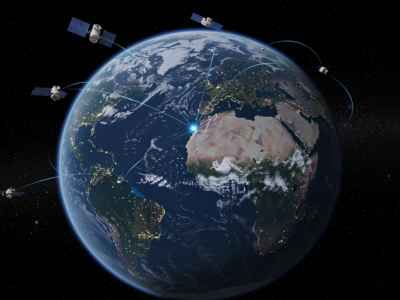
Amazon is rapidly narrowing the gap. Project Kuiper has launched 214 satellites since April 2025 and plans to double its deployment pace with more than 20 launches in the next 12 months. Amazon aims to build a 3,200‑satellite constellation and has secured roughly 100 rocket launches from Blue Origin, United Launch Alliance, and SpaceX itself. Chris Weber, vice president of Amazon’s LEO business, said commercial service is only “months away,” beginning in limited regions before expanding as the network grows.
Although Amazon requested a two-year extension from the FCC to meet its 2026 launch deadline, drawing criticism from SpaceX, the company maintains it is on track to accelerate deployment and scale capacity. Weber said Amazon is “doing everything in our control to get the constellation deployed,” highlighting the company’s recent surge in launch activity.
Amazon’s initial major aviation agreement was with JetBlue, which plans to deploy Kuiper on a quarter of its fleet beginning in 2027. The Delta deal builds on that momentum. Both airlines regard space-based broadband as essential to modernizing the passenger experience, especially as travelers expect uninterrupted entertainment and connectivity.
Delta currently offers WiFi from Viasat and Hughes across its 1,200‑plane fleet, with more than 163 million SkyMiles members having used its connection services. By adopting Amazon’s Kuiper system, Delta hopes to deliver more consistent performance powered by low Earth orbit technology, which promises stronger coverage and fewer dropouts compared to older geostationary networks.
Industry analysts indicate that the new deal strengthens Amazon’s position against Starlink at a critical time. The aviation connectivity innovation sector is expanding quickly, and airlines are seeking additional options. Amazon’s entry introduces stronger competition, which is likely to reduce prices and accelerate technological advancements throughout the industry.
Meanwhile, the LEO Satellite Market continues to grow as companies adopt strategies that focus on high‑density constellations, faster launch cycles, and global broadband coverage. Many providers now pursue hybrid space‑to‑cloud systems and advanced antennas tailored for airlines. Market expansion is expected to accelerate as travel rebounds and the demand for high-speed in-flight connectivity continues to rise.
Through the Amazon–Delta in-flight WiFi partnership, Amazon demonstrates that Project Kuiper is prepared to compete with Starlink in the critical domain of providing connectivity to millions of airline passengers. The competition for next-generation airline connectivity is now firmly established, driven by advancements in space-based broadband technology.