
The Amazon Globalstar acquisition marks a major move as Amazon steps deeper into space‑based internet services. In a deal valued at $11.57 billion, Amazon agreed to buy satellite firm Globalstar. The purchase strengthens Amazon’s satellite strategy as it works to compete with Elon Musk’s Starlink satellite network.
Amazon said the agreement will add Globalstar to its growing Project Kuiper effort. Globalstar operates about two dozen low Earth orbit satellites. These satellites focus on low‑data connections rather than full broadband. However, they support direct‑to‑device connectivity, which allows phones to connect without cell towers.
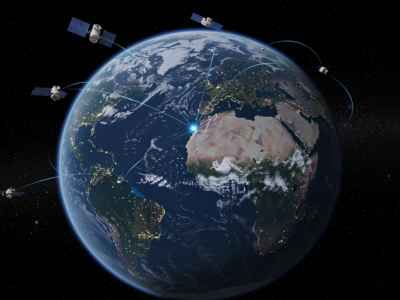
Through this deal, Amazon boosts its current network of more than 200 satellites. Even so, Starlink remains far ahead. SpaceX has deployed around 10,000 satellites and serves over nine million users globally. Despite this gap, Amazon believes the acquisition will speed up its expansion plans. Amazon plans to launch more than 3,200 satellites by 2029 under Project Kuiper. Federal rules require roughly half of them to be active by July 2026. Therefore, timing remains critical. Amazon also plans to launch its satellite broadband service later this year, targeting remote areas first.
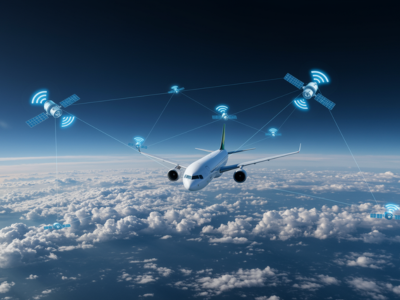
The technology developed by Globalstar provides a unique advantage. It facilitates connectivity from satellite systems straight to phones. This makes it possible for satellite connectivity to be used for emergencies and restricted data transmissions. Apple’s collaboration with Globalstar enables its Emergency SOS functions on iPhones.
Following the acquisition news, Amazon confirmed that the Apple Globalstar partnership will continue. Apple invested about $1.5 billion into Globalstar in 2024. That deal also gave Apple a 20% ownership stake. The companies said users will see no service disruption. The Amazon Globalstar acquisition further underscores increased consolidation within the satellite industry. Technology firms find themselves competing fiercely to gain control of telecom infrastructure from space. According to industry experts, size is the main determinant for success in this particular market.
In the middle of this competition, the Satellite Communication Market continues to expand. Companies focus on next‑gen satellite network design and lower launch costs. Many players now pursue partnerships or mergers to strengthen coverage and speed deployment. Analysts expect more consolidation soon.
The agreement will also facilitate future direct-to-device service. These plans will be implemented by the year 2028. The technology would enable communication through phones during emergencies. It will also enhance mobile coverage in rural areas that lack network infrastructure.
Meanwhile, Starlink already works on similar capabilities. SpaceX teams up with telecom firms such as T‑Mobile. This move seeks to expand the competition of satellite broadband beyond consumer Internet at home. The competition has moved to mobiles and emergencies as well. Investors responded positively to the news. Shares of Globalstar went up more than 10% after the news. At the same time, Amazon shares also climbed nearly 3%.
Under the deal, Globalstar shareholders can choose cash or Amazon stock. Each share equals $90 in cash or 0.321 Amazon shares. The offer represented more than a 30% premium on recent prices. The final value may change based on Amazon’s stock price.
Regulatory approval remains a key step. The acquisition needs FCC approval and satellite deal clearance. The chairman of the U.S. Federal Communications Commission stated that the agency is still open-minded. The transaction is expected to be completed next year. In the United States, the effects will likely increase over time. Better connectivity options could be made available to rural consumers. Improved emergency communications would benefit all citizens.
At the same time, Amazon’s move may push rivals to respond faster. Expanded satellite constellation expansion could reshape broadband access. As competition grows, innovation may reach more underserved communities. The Amazon Globalstar acquisition shows how quickly space tech investments are rising. With satellite broadband demand climbing, Amazon signals it plans to play a long game. The battle for space‑based connectivity has clearly entered a new phase.