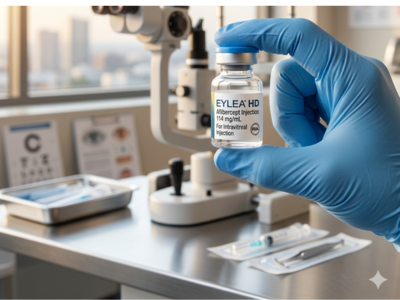

The U.S. Food and Drug Administration has approved EYLEA HD, marking a major advancement in treating serious retinal diseases. The decision strengthens Regeneron Pharmaceuticals’ ophthalmology portfolio while also expanding therapeutic options for patients facing vision-threatening conditions worldwide.
Regeneron announced that EYLEA HD, an 8 mg aflibercept injection, received approval for treating macular edema following retinal vein occlusion. Moreover, regulators granted flexibility in dosing schedules, allowing physicians to tailor treatment plans based on patient needs and disease progression. This flexibility reflects a broader shift toward personalized medicine in ophthalmology.
EYLEA HD represents a higher-dose formulation of aflibercept, which targets vascular endothelial growth factor, a protein responsible for abnormal blood vessel growth. By inhibiting this pathway, EYLEA HD reduces leakage and swelling in the retina. Consequently, the therapy helps stabilize or improve vision in patients suffering from retinal diseases that often lead to permanent blindness if untreated.
Importantly, EYLEA HD introduces extended dosing intervals, which can reduce the frequency of injections after an initial monthly treatment phase. Typically, patients begin with several monthly doses, after which doctors may extend treatment intervals up to eight weeks. As a result, patients may experience fewer clinic visits, thereby lowering treatment burden and improving adherence to long-term care plans.
Clinical data played a crucial role in securing the approval of EYLEA HD for this new indication. Specifically, the Phase 3 QUASAR trial evaluated the safety and efficacy of EYLEA HD in patients with retinal vein occlusion. The study showed that EYLEA HD achieved non-inferior visual acuity gains compared with standard-dose therapies. In addition, many patients maintained vision improvements with extended dosing intervals, reinforcing its clinical effectiveness.
Furthermore, EYLEA HD demonstrated a safety profile consistent with previous aflibercept treatments. Investigators reported that adverse events remained comparable to existing therapies, which reassures physicians about adopting this higher-dose option. Therefore, clinicians can confidently integrate EYLEA HD into treatment regimens without introducing significant new safety concerns.
In addition, EYLEA HD is now the first and only FDA-approved treatment for retinal vein occlusion that offers dosing intervals of up to eight weeks. Therefore, physicians can potentially reduce the number of injections required over time. This development directly addresses a major concern among patients, as frequent eye injections often cause discomfort and logistical challenges.
The approval of EYLEA HD builds upon its earlier authorization for conditions such as wet age-related macular degeneration, diabetic macular edema, and diabetic retinopathy. Consequently, EYLEA HD now covers a broader spectrum of retinal diseases, enhancing its clinical utility and making it a versatile treatment option in ophthalmic care.
Furthermore, regulators approved a monthly dosing option across all EYLEA HD indications for patients who may benefit from more frequent treatment. This dual flexibility ensures that clinicians can adjust dosing intervals based on disease severity, treatment response, and patient-specific factors. As a result, EYLEA HD supports both intensive and maintenance treatment strategies.
EYLEA HD also strengthens Regeneron’s competitive position in a rapidly evolving ophthalmology market. Although biosimilars and rival anti-VEGF therapies continue to emerge, the company aims to differentiate EYLEA HD through improved durability and reduced treatment burden. This strategy reflects increasing demand for therapies that balance efficacy with convenience.
At the same time, the broader EYLEA franchise faces growing competition from lower-cost alternatives and new drug candidates. However, the introduction of EYLEA HD signals Regeneron’s commitment to innovation. By advancing higher-dose formulations and expanding indications, the company seeks to maintain its leadership in retinal disease treatment.
From a patient perspective, EYLEA HD offers meaningful advantages in both convenience and outcomes. Because retinal diseases often require lifelong management, reducing injection frequency can significantly improve quality of life. Moreover, fewer clinic visits may reduce indirect costs, such as travel and time off work, which often burden patients and caregivers.
Meanwhile, ophthalmologists have welcomed the approval of EYLEA HD, as it provides additional flexibility in clinical decision-making. In practice, doctors can now individualize treatment regimens more effectively, balancing efficacy, safety, and patient preferences. This flexibility is particularly important in chronic conditions where long-term adherence determines outcomes.
Looking ahead, experts believe that EYLEA HD could significantly influence treatment paradigms for conditions such as wet age-related macular degeneration and diabetic macular edema. As clinicians adopt longer dosing intervals, healthcare systems may experience reduced patient load and improved resource allocation.
The FDA’s latest approval of EYLEA HD underscores a significant step forward in ophthalmic care. As the treatment landscape continues to evolve, EYLEA HD is poised to play a central role in improving outcomes for patients with vision-threatening conditions while also redefining standards of care in retinal therapy.