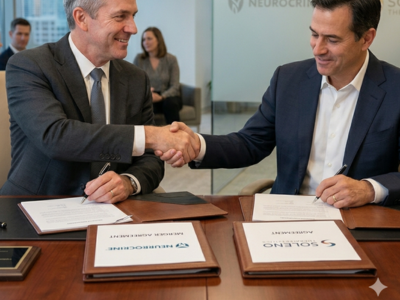

In a strategic move aimed at strengthening its foothold in endocrinology and rare diseases, Neurocrine Biosciences announced plans to acquire Soleno Therapeutics for an estimated $2.9 billion in cash, marking a significant milestone in its long‑term growth strategy. The deal, which values Soleno’s stock at $53 per share, represents a substantial premium and underscores Neurocrine’s commitment to expanding its portfolio of innovative treatments addressing underserved diseases.
Under the definitive agreement, Neurocrine will add Soleno’s VYKAT™ XR, the first‑in‑class and only FDA‑approved treatment for hyperphagia associated with Prader‑Willi syndrome, to its growing suite of medicines that address complex conditions. Since its approval and launch in 2025, VYKAT XR has demonstrated strong early adoption, generating notable revenue and offering hope to patients facing relentless hunger and related complications.
“This acquisition advances Neurocrine’s mission to deliver life-changing treatments while reinforcing our leadership in endocrinology and rare diseases,” said Kyle W. Gano, Ph.D., Chief Executive Officer of Neurocrine Biosciences. He emphasized that integrating VYKAT XR into Neurocrine’s portfolio will broaden patient access and accelerate growth across multiple therapeutic areas.
The acquisition is set to solidify Neurocrine’s presence in rare diseases by complementing its existing therapies, which include INGREZZA® for movement disorders and CRENESSITY® for classic congenital adrenal hyperplasia. Both of these treatments contribute to Neurocrine’s rapidly expanding commercial portfolio and reflect the company’s focus on complex, underaddressed conditions.
Prader‑Willi syndrome (PWS), the rare genetic disorder targeted by VYKAT XR, affects approximately one in every 15,000 live births in the United States. The syndrome is marked by a chronic, overwhelming sense of hunger that can lead to severe obesity, diabetes, and other life-threatening complications, as well as cognitive and behavioral challenges that significantly impair quality of life.
With this acquisition, Neurocrine plans to leverage its medical and commercial infrastructure to enhance VYKAT XR’s reach, ensuring that more patients with PWS can benefit from the therapy’s transformative potential. The company’s leadership also anticipates that the strong intellectual property estate supporting VYKAT XR will provide sustainable value well into the mid‑2040s, securing long‑term growth.
Analysts have applauded the move, noting that the acquisition bolsters Neurocrine’s competitive position in endocrinology and rare diseases while diversifying its revenue streams. Industry observers have also pointed out that VYKAT XR’s strong early performance reflects a growing demand for treatments in areas where limited options have existed previously.
According to market reports, Soleno’s stock surged following the announcement, reflecting investor confidence in the deal’s strategic value and the anticipated expansion of Neurocrine’s reach within the rare diseases market. By bringing VYKAT XR under its umbrella, Neurocrine is poised to deliver meaningful clinical and commercial benefits over the coming years.
In addition to clinical impact, the transaction is expected to enhance Neurocrine’s financial profile by diversifying its portfolio with complementary, high‑growth assets. INGREZZA and CRENESSITY both contributed significantly to revenue in the previous year, and with VYKAT XR’s addition, Neurocrine anticipates sustained momentum through the end of the decade.
The boards of directors for both companies have already approved the transaction, which remains subject to customary closing conditions. The acquisition is expected to conclude within approximately 90 days, after regulatory clearance and shareholder approvals are obtained.
Soleno’s leadership has expressed optimism about the benefits of the partnership, stating that Neurocrine’s experience in endocrinology and rare diseases positions the combined organization to better serve the PWS community. By joining forces, both companies aim to extend VYKAT XR’s impact and explore future opportunities in related therapeutic areas.
Importantly, the acquisition aligns with broader trends in the biopharmaceutical industry, where firms increasingly seek to enhance their pipelines through targeted acquisitions and collaborations. With unmet needs in endocrinology and rare diseases remaining high, strategic deals like this illustrate how companies are prioritizing innovation to address complex patient populations.
In summary, Neurocrine’s acquisition of Soleno Therapeutics represents a major advance in the company’s endocrinology and rare diseases strategy, combining cutting‑edge therapies with operational strength to improve patient outcomes. The integration of VYKAT XR into Neurocrine’s portfolio is expected to accelerate growth while bringing new hope to individuals living with Prader‑Willi syndrome and their families.