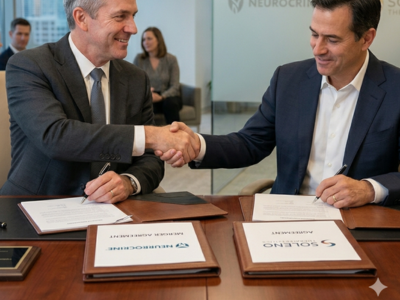

Zebra Technologies and Aiva Health have announced a strategic partnership to transform hospital care delivery through voice-driven automation. The collaboration focuses on enabling hands-free nurse workflows, reducing administrative burden, and improving bedside efficiency in modern healthcare environments. Additionally, the initiative integrates artificial intelligence into frontline clinical operations to streamline communication and documentation processes.
The partnership introduces Aiva’s AI-powered Nurse Assistant across Zebra’s healthcare devices, including HC20 and HC50 mobile computers. Moreover, it extends support to Zebra’s new WS101-H wearable badge, which allows nurses to interact with systems using voice commands. Consequently, healthcare professionals can complete tasks without touching screens or devices during patient care.
Zebra Technologies, a global leader in digitizing frontline workflows, continues to expand its healthcare ecosystem. Meanwhile, Aiva Health contributes its voice-first clinical intelligence platform designed for secure hospital use. Together, both companies aim to enhance productivity while maintaining strict compliance standards in clinical environments through hands-free nurse workflows.
Furthermore, the solution connects directly with major healthcare platforms such as Epic and Oracle Health. As a result, nurses can update electronic health records, submit work orders, and access clinical references through voice interaction. This integration significantly reduces delays in documentation and improves real-time decision-making at the bedside.
In addition, the system supports multilingual interpretation services through platforms like LanguageLine and AMN Healthcare. Therefore, care teams can communicate more effectively with patients who speak different languages. This capability strengthens patient safety and improves overall hospital communication workflows.
Importantly, the partnership builds on growing industry demand for automation in healthcare. Hospitals increasingly seek tools that reduce clinician burnout and improve workflow efficiency. Consequently, hands-free nurse workflows have become a critical focus area for healthcare innovation leaders worldwide.
According to the U.S. Bureau of Labor Statistics (BLS), the demand for registered nurses continues to rise steadily. Employment of registered nurses is projected to grow about 6% from 2022 to 2032. This growth equals about 177,400 job openings each year on average. Additionally, demand is driven by an aging population and increased chronic illness care needs. These pressures make efficiency tools like hands-free nurse workflows increasingly relevant in modern hospitals.
Zebra’s Orchestrated Care framework also supports the partnership’s long-term vision. It emphasizes intelligent visibility, empowered teams, and optimized operations across hospital systems. Likewise, Aiva’s voice AI enhances this framework by providing real-time, voice-enabled assistance directly at the point of care.
Additionally, early deployments of similar technologies have shown measurable benefits in clinical environments. For example, hospitals report reduced documentation time and fewer interruptions during patient care. Therefore, the new partnership builds on proven demand for voice-enabled healthcare solutions.
However, successful adoption will require strong integration with existing hospital infrastructure. Healthcare providers must also ensure staff training and data security compliance. Still, both companies emphasize that their solution is designed to meet strict HIPAA and enterprise security standards while supporting hands-free nurse workflows.
Meanwhile, industry analysts note that voice AI adoption in healthcare is accelerating rapidly. Hospitals are investing in tools that allow clinicians to focus more on patients rather than paperwork. As a result, solutions like hands-free nurse workflows are expected to gain broader adoption in the coming years. Moreover, Zebra’s global presence across more than 100 countries positions the partnership for large-scale deployment. This reach enables hospitals in diverse regions to access advanced workflow automation tools. Consequently, the collaboration may influence global standards for digital nursing practices.
In conclusion, Zebra Technologies and Aiva Health are reshaping clinical environments with voice-enabled intelligence. Their partnership delivers a practical step toward reducing administrative load and improving patient care delivery. Ultimately, hands-free nurse workflows represent a significant shift toward more efficient, connected, and patient-focused healthcare systems supported by rising U.S. nursing demand trends.