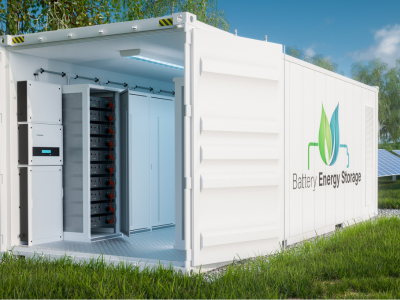

The rapid growth of battery storage adoption is being driven by a combination of factors that are reshaping the energy landscape. Renewable energy generation continues to expand, but solar and wind resources do not always produce electricity when it is needed most. At the same time, electrification trends, increasing electricity consumption, and the rise of AI-powered infrastructure are placing additional pressure on existing power grids.
Battery Energy Storage Systems (BESS) help address these challenges by storing excess electricity and releasing it when demand rises. This improves grid stability, enhances energy resilience, and gives utilities greater flexibility in managing power supply. As governments and businesses pursue decarbonization goals, battery storage is increasingly viewed as a critical investment rather than an optional addition.
How Battery Storage Strengthens Grid Reliability
One of the most significant obstacles encountered by renewable energy integration is the issue of intermittency. Solar plants produce power only under sunlight, whereas wind plants rely on weather patterns. Since no storage systems have been installed, any additional renewable energy is wasted, and the process becomes less efficient.
Using batteries to store any extra electricity and release it during peak demand times becomes an effective solution in such a scenario. This technology will ensure that the energy grid functions reliably, and there is a reduced need for fossil fuel-powered backup generators. As renewable energy capacity grows across Europe and North America, utility-scale battery storage is becoming essential for ensuring that clean energy remains available when consumers need it most.
What FlexGen's European Expansion Signals
A recent example of this trend is FlexGen's expansion into Europe. The company is bringing its Battery Energy Storage Systems (BESS) expertise, HybridOS® energy management system, analytics platform, site-level SCADA, and power plant controls to markets facing rising energy demand and increasing renewable energy penetration.
FlexGen has already secured projects in the UK, Finland, and Sweden, where battery storage capacity is being deployed to reduce renewable energy curtailment and improve asset performance. The energy management system used by the company provides real-time insight into the health of energy assets, assisting in maximizing their performance throughout the life cycle of the battery storage facilities.
One more interesting trend that is associated with the growth of FlexGen’s portfolio is related to the usage of software programs in energy storage technology. The recent achievements in this field suggest that software has become at least as crucial as hardware in battery storage plants.
Why AI Data Centers Need Battery Storage
Another major driver of battery storage adoption is the rapid expansion of AI data centers. The growing use of large language models (LLMs), cloud computing platforms, and AI infrastructure is creating unprecedented electricity demand, forcing utilities and grid operators to rethink how power is generated, stored, and distributed.
FlexGen specifically recognized battery storage’s growth potential in applications within the data center industry. FlexGen solutions are aimed at assisting in handling fluctuating power needs, ensuring power quality, and providing a reliable power supply in facilities with AI power demands.
This trend is also visible in North America. Cypress Creek recently secured $3.5 billion in financing for its Arkansas Steel River Energy Center, which includes 1.9 GWh of battery storage capacity. The project reflects how energy developers are increasingly investing in grid-scale energy storage to meet growing electricity demand from AI data centers and other high-consumption industries.
How Major Investments are Driving Battery Storage Growth
In terms of investments in batteries for energy storage, utilities and renewable energy firms are not the only parties involved anymore. Other companies from different sectors understand the potential and significance of this technology. For instance, General Motors is stepping away from developing only electric cars and turning towards stationary energy storage by working on its sodium-ion batteries along with Peak Energy firm.
Utilities are also accelerating deployment. Prospect Power, a 150 MW / 600 MWh project in Virginia, recently entered operation as the largest standalone battery storage facility in both Virginia and the PJM region. The project was developed to strengthen grid reliability and support growing electricity demand, demonstrating how large-scale battery storage is becoming an important component of modern energy infrastructure.
These combined investments clearly indicate that companies, utilities, and energy firms are seeing battery storage capacity as an increasingly efficient long-term strategy to address demand management, grid resiliency, and renewable energy growth.
Future of Battery Storage Adoption in Europe and North America?
The outlook for battery storage adoption remains exceptionally strong. Rising renewable energy generation, increasing electrification, growing AI data center demand, and ongoing grid modernization efforts are expected to drive continued investment in Battery Energy Storage Systems (BESS) across both regions.
With the development of the energy market, batteries are becoming an increasingly important component for improving grid reliability, providing energy security, minimizing the waste of renewable energy, and increasing the overall flexibility of the power system. The example of the company FlexGen shows how the application of energy management technologies may enhance the effectiveness of battery storage.
This technology, which was once regarded as complementary, is rapidly emerging as a key technology for the contemporary electrical grid. It is anticipated that as Europe and North America move towards sustainable energy systems, one of the defining trends for the future will be battery storage.