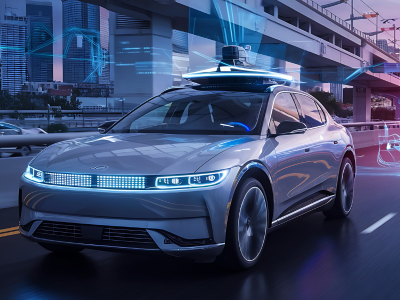
Zoox robotaxi testing is set to expand into two new major U.S. cities, as Amazon‑owned Zoox announced plans to begin operating in Phoenix and Dallas in the coming weeks. The expansion marks a significant step in the company’s effort to scale its autonomous ride‑hailing service across North America, and it brings Zoox’s total presence to 10 U.S. markets.
Zoox will initiate its Phoenix and Dallas programs by deploying a limited number of retrofitted Toyota Highlander SUVs equipped with its autonomous driving system. Human safety drivers will be present to manage initial mapping and training activities. These vehicles will collect local environmental data and facilitate market preparation prior to the introduction of the company’s steering‑wheel‑free Zoox robotaxi for public road testing. This phased deployment strategy reflects the company’s approach in San Francisco and Las Vegas, where the Zoox AI vehicle fleet is already operational.
In a statement, Zoox said Phoenix will allow its autonomous system to operate in extreme heat, heavy dust and high‑speed roadways, conditions that differ sharply from California’s coastal climate. Dallas offers another valuable training environment, with sprawling road networks, diverse weather patterns and complex intersections common across North Texas. These variations will help Zoox refine its artificial intelligence models as it competes with other self‑driving car developers across the U.S.
Zoox robotaxi ridership continues to grow as the company expands. Zoox reported that it has served more than 300,000 riders since its public launch in Las Vegas and San Francisco, two of the most competitive autonomous ride‑hailing markets in the country. It also recently began offering free rides in parts of San Francisco, following earlier deployments in Las Vegas. These milestones reflect the company’s intent to challenge leaders like Waymo and Tesla in the race for commercial robotaxi adoption. The expansion into Dallas and Phoenix also includes new infrastructure. Zoox will establish dedicated depots in both cities to support vehicle maintenance and charging.
In addition, the company will build a new fusion center in Scottsdale, Arizona, which will provide teleguidance, rider support and mission control for the Zoox autonomous vehicle fleet across the region. The facility will join existing operations hubs in Las Vegas and the San Francisco Bay Area, strengthening Zoox’s broader U.S. network.
Amazon acquired Zoox for $1.3 billion in 2020 and has invested steadily in expanding its testing footprint across major metropolitan areas. In addition to Phoenix and Dallas, Zoox now operates or tests its self‑driving car technology in Seattle, Austin, Miami, Los Angeles, Atlanta and Washington, D.C. As Amazon moves deeper into next‑generation transportation, autonomous ride‑hailing Zoox deployments could one day complement its broader logistics strategy.
The autonomous vehicle sector in North America is evolving rapidly, with Zoox's robotaxi testing contributing to the region's increasing momentum. While Waymo remains the leading company, Zoox's introduction of purpose-built electric vehicles to additional markets indicates intensifying competition. Tesla is also expanding its self-driving programs in selected cities, although it continues to encounter regulatory obstacles. In contrast, Chinese robotaxi developers such as Baidu Apollo, Pony.ai, and WeRide maintain substantial market share in Asia, but their limited presence in the United States provides Zoox with a competitive advantage in the American market.
The Zoox robotaxi program highlights persistent safety debates in the United States, as regulatory bodies continue to evaluate autonomous vehicle performance. A federal self-driving safety forum is scheduled for this week, with the CEOs of Zoox, Waymo, and Aurora expected to participate. Policymakers are currently considering oversight measures for emerging autonomous services operating on public roads. Recent incidents involving various self-driving systems have intensified public scrutiny and raised questions about the appropriate pace for expanding robotaxi programs.
Zoox has underscored its commitment to safety by retaining human operators for initial testing and by investing in teleguidance and real‑time support teams housed in its fusion centers. The company’s robotaxi manufacturing operations also continue to expand, supported by a 220,000‑square‑foot factory in the San Francisco Bay Area where it plans to produce up to 10,000 autonomous vehicles per year once fully operational.
With the addition of Dallas and Phoenix, the Zoox robotaxi strategy enters an important growth phase. Zoox aims to utilize the diverse road and weather conditions in the United States to develop a more robust and scalable self-driving system. As competition increases within the U.S. autonomous ride-hailing market, the company's recent initiatives strengthen its potential to assume a significant role in the advancement of driverless transportation.