
As global health authorities intensify efforts to contain a rapidly evolving Ebola outbreak in Central and East Africa, the United States has moved quickly to strengthen its defenses against the virus. Federal agencies, led by the Centers for Disease Control and Prevention (CDC), are implementing a layered strategy that includes travel restrictions, enhanced airport screening, and strengthened hospital preparedness to prevent Ebola from entering the country. The current outbreak, linked to the rare Bundibugyo strain, was declared a Public Health Emergency of International Concern by the World Health Organization on May 17, 2026, with early estimates indicating hundreds of suspected cases and significant fatalities, underscoring the need for coordinated global action.
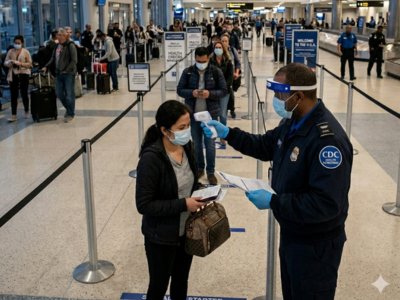
A key element of the US response is the expansion of screening protocols at major international airports. The CDC has increased monitoring at major entry points such as Washington Dulles International Airport and Hartsfield–Jackson Atlanta International Airport. Travelers arriving from affected countries, including the Democratic Republic of the Congo, Uganda, and South Sudan, must undergo temperature checks, symptom assessments, and detailed travel history reviews. Furthermore, the growing adoption of protective masks among airport personnel serves as a critical safeguard, significantly minimizing exposure to potentially infectious materials while strengthening overall infection-control protocols.
As a precaution, even asymptomatic travelers are monitored for 21 days, while those showing symptoms are immediately referred for medical evaluation. The government has also imposed temporary entry restrictions on certain individuals who have recently visited outbreak regions, complemented by a broader system that includes overseas exit screening, airline illness reporting, and post-arrival health tracking to identify risks early.
Health officials emphasize that although the current risk to the US population remains low, early preventive measures are critical. Ebola spreads through direct contact with infected bodily fluids and is only contagious after symptoms appear, making targeted screening and rapid intervention effective tools for containment. Beyond border control, the healthcare system in the United States has implemented comprehensive readiness protocols. Hospitals are required to identify potential Ebola cases quickly, isolate patients, and follow strict infection control procedures.
Central to these efforts is the use of personal protective equipment (PPE), with healthcare workers required to wear full-body protective gear, including impermeable gowns, respirators, double gloves, and face shields, to prevent exposure. Hospitals are also increasing staff training, reviewing PPE inventories, and coordinating closely with public health agencies to ensure rapid response capabilities. Screening processes at emergency departments now routinely include travel history and exposure assessments to improve early detection.
The renewed Ebola threat has also contributed to significant growth in the PPE market, reflecting increased investment in public health preparedness. Demand for PPE kits, especially those tailored for healthcare and emergency response, has risen as institutions prioritize readiness for potential outbreaks. This sustained growth is driven by regulatory requirements, increased awareness of infection control, and the continued need for preparedness against emerging diseases.
Lessons learned from the COVID-19 pandemic have significantly shaped current preparedness efforts, particularly by exposing critical gaps in global and domestic supply chains. In response, the United States has accelerated policy initiatives aimed at strengthening domestic manufacturing of PPE, reducing reliance on external suppliers, and enhancing supply security. Programs such as “Make PPE in America” reflect a broader strategic shift toward building resilient, self-sustaining production ecosystems capable of meeting surge demand during health emergencies.
Beyond policy, technological advancements are also redefining the PPE landscape, with innovations in lightweight materials, improved filtration systems, and ergonomic design improving both protection and user compliance across healthcare environments. At the same time, market dynamics indicate a transition from reactive procurement to proactive preparedness. Hospitals and government agencies are increasingly adopting stockpiling strategies and long-term supply contracts, ensuring that critical protective resources remain readily available even in the absence of an active crisis. By integrating rigorous entry screening protocols with robust hospital preparedness and sustained investment in protective equipment, the United States is adopting a forward-looking approach to biosecurity. These measures not only mitigate the risk of Ebola importation but also strengthen the nation’s overall readiness for future outbreaks.