
Modern imaging technologies continue to transform how industries capture, analyze, and interpret visual information. Among these innovations, near infrared imaging has emerged as a powerful solution for applications requiring enhanced visibility beyond the capabilities of conventional cameras. From healthcare and industrial inspection to surveillance and biomedical research, this technology delivers valuable insights that remain invisible to the human eye.
As organizations increasingly rely on advanced imaging systems for accurate decision-making, near-infrared imaging continues to gain importance across multiple industries. Furthermore, ongoing technological advancements and expanding healthcare applications are accelerating market growth worldwide.
Understanding Near-Infrared Imaging and How it Works
Near infrared imaging refers to the process of capturing images using light within the near-infrared spectrum, which typically ranges from approximately 650 nanometers to 950 nanometers. Since these wavelengths fall beyond the visible range of human vision, specialized sensors and cameras are required to detect and visualize them. Unlike traditional imaging systems that depend on visible light, near-infrared imaging utilizes reflected infrared energy to reveal details that standard cameras often cannot detect. As a result, it provides enhanced contrast, improved visibility, and greater analytical capabilities. Additionally, near-infrared wavelengths can penetrate certain materials more effectively than visible light. Therefore, this technology helps identify hidden structures, detect defects, and analyze biological tissues with greater precision.
The functionality of near-infrared imaging depends on specialized sensors capable of detecting infrared wavelengths. During image acquisition, infrared illumination strikes an object and reflects toward the imaging sensor. The sensor then converts the reflected infrared energy into digital information that can be processed and analyzed. Modern imaging systems often use advanced CMOS sensors designed to enhance infrared sensitivity while maintaining excellent image quality. Moreover, sensor manufacturers continuously improve their designs to increase responsiveness across near-infrared wavelengths. As a result, today's near-infrared cameras deliver high-performance imaging in challenging environments, including low-light and variable lighting conditions.
Growing Role of Near-Infrared Imaging in Healthcare
Healthcare has become one of the most important application areas for near-infrared imaging. In recent years, a significant rise in surgical procedures has increased the use of advanced visualization equipment in operating rooms and clinical settings. Surgeons increasingly rely on enhanced imaging technologies to improve procedural accuracy and patient outcomes. Moreover, the growing adoption of minimally invasive techniques has strengthened demand for sophisticated visualization systems.
Microsurgery has also gained substantial popularity due to the increasing prevalence of chronic diseases associated with work-related stress, unhealthy eating habits, hereditary conditions, and exposure to harmful chemicals. As a result, healthcare providers require advanced imaging solutions that support precision-based surgical procedures. Additionally, growing awareness regarding early diagnosis and advanced treatment methods has encouraged healthcare institutions to invest in innovative imaging technologies. Therefore, the demand for near-infrared imaging continues to expand across hospitals, research centers, and specialty clinics.
Impact of Cosmetic Surgery Trends
The rise in cosmetic and reconstructive surgeries has additionally promoted the adoption of near-infrared imaging technologies. In the healthcare field, there is an increased utilization of innovative visualization techniques in order to enhance surgery planning and accuracy. Additionally, enhanced consumer awareness of aesthetic procedures is a key factor driving market demand for advanced imaging technologies. Therefore, the aesthetic surgery trend has become a significant market growth driver. With an increased number of procedures performed worldwide, the demand for proper visualization systems is projected to grow significantly in the coming years.
Applications of Near Infrared Imaging
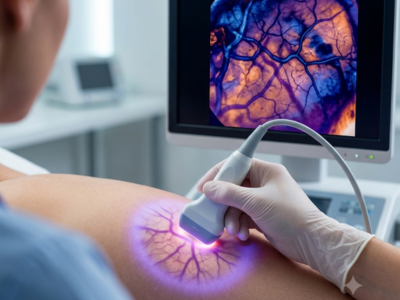
Healthcare professionals use near-infrared imaging to visualize tissues, monitor blood flow, and support diagnostic procedures. Additionally, surgeons utilize these systems to enhance precision during complex operations. Near-infrared imaging plays an important role in drug discovery, clinical research, and biotechnology development. Researchers use this technology to analyze biological processes and evaluate therapeutic outcomes. As pharmaceutical companies increase investments in research and development, demand for advanced imaging solutions continues to rise.
Industrial uses of near infrared imaging have ranged from the identification of product flaws and examination of the quality of raw materials to enhancing the overall production processes. As such, businesses are able to reduce waste and ensure product quality standards. Near infrared imaging provides reliable performance in low-light conditions, making it ideal for surveillance, access control, and security monitoring applications. In a research and development environment, near-infrared imaging is applied to the investigation into material properties and the investigation into both biological and chemical systems. The technology continues to be invaluable for these scientific disciplines.
United States Market Outlook
The United States represents one of the most significant markets for near-infrared imaging. The country's well-established pharmaceutical and biotechnology sectors continue to drive demand for advanced imaging technologies. Moreover, growing investments in research and development activities have accelerated the adoption of innovative imaging systems. Clinical research organizations, academic institutions, and biotechnology companies increasingly rely on near-infrared imaging to support drug development and diagnostic investigations.
The demand is also growing due to the expansion of clinical trials and biomedical research programs. Therefore, imaging technologies are essential to the development of therapeutics and precision medicine initiatives. Moreover, the growing focus on healthcare innovation and early disease detection is projected to offer new opportunities for the growth of the market in the coming years.
Future Outlook for Near-Infrared Imaging
The future of near-infrared imaging remains highly promising. Performance and possible applications are expanding with improvements in sensor technology, artificial intelligence, and image processing power. At the same time, increasing surgical procedures, expanding pharmaceutical research, growing prevalence of chronic diseases, and increasing biotechnology activities will continue to drive the demand. This is expected to increase demand for infrared imagers across the healthcare, research, manufacturing, and security sectors.
Near infrared imaging technology is an indispensable tool for advanced visual analysis in several industries. Since it offers excellent potential for revealing previously invisible data, functioning in limited light conditions, and enabling non-contact imaging, it is extremely important for new applications. Additionally, increases in surgical procedures, increased use of microsurgery, expansion of cosmetic treatments, and continued development of pharmaceutical research have driven demand for new application areas. Innovation will ensure that near-infrared imaging will become a more crucial technology within the healthcare, research, and industrial inspection and diagnostic sectors throughout the globe.