
The birth of a baby brings joy, excitement, and important healthcare responsibilities for parents. Among these responsibilities, newborn screening plays a critical role in protecting a child’s long-term health. This screening helps doctors identify serious but treatable medical conditions before symptoms appear. As a result, babies receive timely treatment and improved health outcomes.
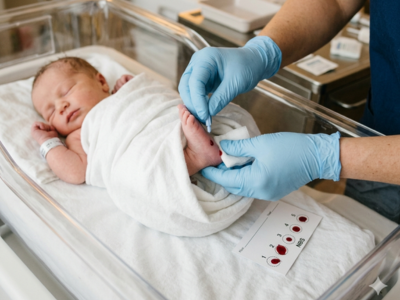
For more than 60 years, public health newborn screening programs have supported families across the United States. Today, every U.S. state performs newborn screening shortly after birth. Additionally, more than 98% of infants receive dried blood spot screening during their first days of life. This process involves collecting a few drops of blood, placing them on a paper card, and sending the sample to a laboratory for testing. Through this approach, healthcare professionals identify conditions such as congenital hypothyroidism, cystic fibrosis, and sickle cell disease. Furthermore, newborn screening programs help more than 7,000 infants receive timely interventions annually.
Despite these achievements, healthcare systems still face challenges in implementing consistent and accessible newborn screening programs worldwide. Nevertheless, medical experts continue to improve testing technologies and expand screening coverage.
What Is Newborn Screening?
Newborn screening is a preventive healthcare test performed within 24 to 48 hours after birth. Doctors use this screening to detect genetic, metabolic, hormonal, and developmental disorders in newborn babies. Although many infants appear healthy after delivery, some may silently carry life-threatening medical conditions. This screening process usually includes blood tests, hearing evaluations, and heart screenings. Together, these assessments help doctors identify diseases before symptoms develop. Consequently, healthcare professionals can begin treatment early and reduce long-term complications.
Moreover, newborn screening creates a strong foundation for healthy growth and development. Early medical intervention often prevents developmental disabilities, neurological damage, and chronic health problems later in life.
Why Is Newborn Screening Important?
The importance of newborn screening lies in its ability to detect hidden disorders before they become severe. Certain medical conditions may not show visible symptoms during the first few weeks of life. However, delayed diagnosis can lead to irreversible physical and mental complications. For example, phenylketonuria (PKU) may seem harmless initially. Nevertheless, untreated PKU can affect brain development and intellectual abilities. Similarly, congenital hypothyroidism may interfere with growth and cognitive development without timely treatment.
Furthermore, newborn screening helps reduce medical emergencies by enabling doctors to identify disorders early. The early diagnosis enables parents to learn about the disorder and devise appropriate treatment plans. Consequently, healthcare professionals advocate newborn screening for every newborn child. Healthcare professionals highlight the public health significance of newborn screening programs. Such programs help save lives, enhance developmental prospects, and alleviate healthcare costs to both families and hospitals.
Conditions Detected Through Newborn Screening
Modern newborn screening programs can identify several serious health disorders shortly after birth. Whereas screening panels might differ among different health care systems, physicians usually screen for disorders associated with metabolism, genetics, hormones, and blood.
Some commonly screened disorders include:
- Phenylketonuria (PKU)
- Congenital hypothyroidism
- Sickle cell disease
- Cystic fibrosis
- Spinal muscular atrophy (SMA)
- Galactosemia
- Pompe disease
- Maple syrup urine disease (MSUD)
- Congenital adrenal hyperplasia
- Biotinidase deficiency
Many of these conditions affect metabolism, hormone production, oxygen transport, or muscular function. However, without timely action, infants can suffer from serious diseases, organ malfunctions, developmental disorders, or even death. Hence, newborn screening continues to be one of the most effective preventive healthcare measures available for infants.
Types of Newborn Screening Tests
Healthcare professionals perform different tests during the newborn screening process. Each test evaluates a specific aspect of the baby’s health and development.
Blood Screening Test
In the blood screening test, the process entails obtaining a few drops of blood from the infant’s heel. The sample is then placed on specialized filter paper and sent to the lab for further tests. This blood screening test is conducted to detect metabolic problems before any symptoms become evident. Early detection and treatment have a positive impact on the child’s development.
Today, dried blood spot testing is considered one of the most frequently employed methods for newborn screening worldwide. Because the process is quick and minimally invasive, health care practitioners can perform it within the first days after birth.
Hearing Screening Test
The hearing screening test measures how well the baby responds to sounds. Through this harmless process, earphones are inserted into the baby’s ears to determine the response to sounds. Early hearing detection is vital for speech development. Hence, doctors recommend prompt action once any abnormality is detected during screening tests.
Critical Congenital Heart Disease Screening
Doctors also perform heart screening using pulse oximetry technology. This non-invasive test monitors oxygen levels in the baby’s blood using harmless skin sensors. The low level of oxygen content may suggest congenital heart disease. Early detection makes it possible for doctors to start treatment before serious complications arise.
When Is Newborn Screening Performed?
Newborn screening tests are generally performed by healthcare professionals within 24 to 48 hours following birth. This time frame allows healthcare professionals to detect problems before symptoms become visible. In some situations, babies discharged early may require further testing in the future. Likewise, premature babies or those undergoing intense treatment may be required to have further tests. Parents should discuss newborn screening schedules with pediatricians before leaving the hospital. Clear communication helps families understand the testing process, possible outcomes, and follow-up requirements.
How Can Parents Prepare for Newborn Screening?
Parents can prepare for newborn screening by learning about the process during pregnancy. Discussing screening procedures with pediatricians before delivery helps reduce confusion and anxiety later. Furthermore, it is essential to keep updated contact information with hospitals and healthcare providers. This step ensures timely communication regarding screening reports and follow-up appointments.
Families must also know that newborn screening is an early detection method, but not a definite diagnosis. Therefore, doctors may recommend additional tests whenever abnormalities appear. Most importantly, parents should stay informed, calm, and cooperative throughout the process. Healthcare teams carefully guide families and provide appropriate treatment recommendations whenever necessary.
Future Scenario of Newborn Screening
Today, over 98% of newborns undergo dried blood spot testing, which helps healthcare professionals identify conditions like congenital hypothyroidism, cystic fibrosis, and sickle cell anemia. The future of newborn screening will see significant improvements based on genetic tests, AI, and precision medicine. The use of advanced genomics in diagnosing a larger spectrum of diseases in their early stages is likely in the near future, among other technological improvements, like faster laboratory technologies, which could decrease the time taken for testing and medical intervention.
Also, governments and health agencies are striving to increase the availability of newborn screening tests in underserved areas. With increasing awareness, many more people around the world can have the opportunity for early detection and treatment. Furthermore, innovative treatment modalities, such as gene therapy, can be employed to enhance the outcome of babies detected through newborn screening, supporting healthier growth and reducing long-term medical complications.