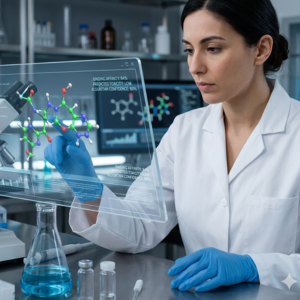

Artificial intelligence (AI) is rapidly transforming drug discovery, enabling researchers to analyze vast volumes of biological and chemical data with remarkable speed and precision. Traditionally, drug discovery has been a lengthy and expensive process. However, AI now allows scientists to identify patterns, predict outcomes, and make data-driven decisions more efficiently. As a result, the entire drug discovery pipeline is becoming faster, more accurate, and increasingly cost-effective.
Moreover, AI plays a vital role in addressing urgent global health challenges, such as emerging diseases and unmet medical needs. Consequently, the integration of AI into drug discovery is not only enhancing innovation but also improving healthcare outcomes worldwide.
Traditional Drug Discovery vs. AI-Driven Approaches
Traditionally, drug discovery has been a complex and time-consuming process, often taking 10 to 15 years and costing billions of dollars to bring a single drug to market. The process includes several stages, such as target identification, lead discovery, preclinical testing, and multiple phases of clinical trials. Unfortunately, most drug candidates fail during these stages, making the process inefficient and risky.
AI-driven drug discovery relies on data-based predictions instead of traditional manual and trial-and-error approaches. For instance, machine learning models analyze vast biological datasets to identify potential drug candidates more efficiently. This enables researchers to significantly cut down both the time and costs involved in early-stage discovery. In addition, AI can simulate biological processes and forecast outcomes digitally, reducing reliance on costly laboratory experiments. It also supports the optimization of drug formulations by identifying effective compounds at lower dosages, thereby improving efficiency while minimizing potential side effects. Therefore, it enhances efficiency while minimizing resource usage.
Key Ways AI Accelerates Drug Discovery
1. Target Identification
Firstly, artificial intelligence enhances the process of target identification by studying genomic and biological data. Thus, AI assists in identifying genes and proteins related to specific diseases. Hence, researchers can narrow down their search for promising drug targets in drug development.
2. Drug Design and Molecule Generation
Moreover, AI enables drug designing through the creation of new chemicals with the best characteristics. Using complex algorithms, molecules are analyzed for their efficiency. Hence, drug designing becomes more inventive and accurate.
3. Virtual Screening
Virtual screening is another important benefit of artificial intelligence, whereby AI assesses millions of chemical compounds within a very short period. This process differs from traditional techniques since AI makes drug discovery faster by filtering out possible drug candidates.
4. Drug-Target Interaction Prediction
Additionally, AI helps in predicting how drugs can interact with the biological target. The effectiveness, metabolism, and toxicity levels of the drug are analyzed. In this way, scientists get information on the functioning of the drug in the human body during drug discovery.
5. Clinical Trial Optimization
AI can also support clinical trials by predicting results and finding the right patients. This reduces failure rates and increases the success of drug discovery efforts. AI can also help to streamline trial design, saving time and resources.
6. Drug Repurposing
Finally, AI helps in drug repurposing by investigating current drugs for novel therapeutic uses. This dramatically cuts down development time and cost, making drug discovery more efficient and adaptable.
Recent Developments in AI-Driven Drug Discovery
Recent advancements demonstrate that AI is moving from experimental research to real-world applications in drug discovery. For example, Amazon introduced “Amazon Bio Discovery,” an AI-powered platform designed to accelerate antibody design and testing. By integrating biological models with laboratory experiments, the platform reduces research timelines from months to weeks. Similarly, regulatory innovation is taking place. The U.S. Food and Drug Administration (FDA) is exploring real-time clinical trials, which allow researchers to monitor drug safety and efficacy continuously. Consequently, these advancements improve decision-making during drug discovery.
In addition, industry collaborations highlight the growing importance of AI. In March 2026, Eli Lilly partnered with Insilico Medicine in a deal worth up to $2.8 billion to advance AI-driven drug discovery. Furthermore, Insilico Medicine achieved a milestone with Rentosertib, an AI-developed drug for idiopathic pulmonary fibrosis. Notably, this drug represents one of the first cases where generative AI identified both the target and the compound. Therefore, these developments clearly indicate that AI is transforming drug discovery from a slow and uncertain process into a faster and more reliable one.
Challenges of AI in Drug Discovery
Despite its advantages, AI-driven drug discovery faces several challenges. First and foremost, data quality and availability remain critical issues. Poor or biased datasets can lead to inaccurate predictions, ultimately affecting the success of drug discovery. Furthermore, regulatory uncertainty may present challenges. Though the FDA is investigating AI applications, clear guidelines are still evolving. As a result, companies may have some difficulties regarding compliance in drug discovery.
Another concern is the lack of transparency in AI models. Many systems function as “black boxes,” making it difficult for researchers to understand how predictions are generated. Consequently, this limits trust and widespread adoption in drug discovery. The technology is restricted to organizations due to high costs and the need for specialized skills. In particular, the AI-powered drug discovery solutions may be difficult to deploy by small firms. Therefore, the above limitations can be overcome through collaboration between technology suppliers, pharmaceutical companies, and regulators.
Future Outlook of AI in Drug Discovery
Looking ahead, the future of drug discovery appears highly promising with continued AI integration. Drug discovery is expected to become more data-driven, automated, and personalized. For instance, AI technologies can facilitate the development of drugs for individual patients, improving therapeutic outcomes. Moreover, the convergence of technologies such as artificial intelligence and supercomputing with practical information about patients would optimize the drug discovery pipeline process for scientists, reducing development timelines and costs even further.
In addition, increased collaboration between technology companies, pharmaceutical companies, and regulatory agencies will promote innovations. Such collaboration will help develop a standard framework and improve the reliability of drug discovery using AI. However, while challenges like data integrity and regulations remain, further studies and funding will most definitely resolve them. Therefore, AI will have an integral part in determining the future of drug discovery and healthcare.
What Lies Ahead
The impact of AI on drug discovery lies in making the processes quicker, more efficient, and accurate. With AI developments being witnessed in drug target identification, design, virtual screening, and clinical trials, this technology is revolutionizing each step of the drug discovery process. Additionally, recent innovations and industry partnerships suggest the increased use of AI in real-world applications.
However, challenges such as data quality, regulatory concerns, and excessive expenses need to be addressed to maximize its benefits. Still, with constant innovations and cooperation, AI-powered drug discovery is poised to revolutionize the entire pharmaceutical industry. Ultimately, AI not only accelerates drug discovery but also redefines how drugs will be discovered, moving us towards a time where drug discovery and development become faster and safer.