
Breathing is a fundamental function that supports every aspect of human health. However, airway narrowing or blockage can severely affect respiratory performance and reduce quality of life. These conditions often make breathing difficult, limit physical activity, and increase the risk of serious complications. Fortunately, advances in pulmonary medicine have introduced effective treatments that restore airflow and improve patient outcomes.
Among these innovations, airway stents have emerged as an important solution for managing airway obstruction. These specialized medical devices help keep air passages open, allowing patients to breathe more comfortably. As respiratory diseases continue to rise worldwide, the importance of airway stents in modern healthcare continues to grow.
Rising Burden of Respiratory Diseases Increases Demand for Airway Stents
The increasing prevalence of respiratory diseases has significantly expanded the need for advanced airway management solutions. Conditions such as chronic obstructive pulmonary disease (COPD), lung cancer, and airway strictures frequently lead to airway narrowing or obstruction, creating a greater demand for airway stents.
According to the Centers for Disease Control and Prevention (CDC), COPD affects more than 14 to 15 million adults in the United States, representing approximately 6% to 7% of the population. Additionally, millions of Americans may have undiagnosed COPD, further increasing the burden of respiratory disease. COPD often causes chronic inflammation and structural changes within the airways, which can contribute to severe breathing difficulties.
Lung cancer also remains a major health concern. The American Cancer Society estimates that the United States will record approximately 229,410 new lung cancer cases in 2026, including 110,910 cases among men and 118,500 cases among women. Furthermore, lung cancer is expected to cause nearly 124,990 deaths during the same year. Because tumors can compress or invade the airways, many patients develop significant airway obstruction that requires immediate intervention. As the number of respiratory disease cases continues to increase, healthcare providers are increasingly utilizing airway stents to restore airflow, relieve symptoms, and improve patient quality of life.
Understanding Airway Obstruction
Airway obstruction occurs when the trachea or bronchi become partially or completely blocked. This condition can result from both cancerous and non-cancerous causes. For example, lung tumors may directly compress the airway, while chronic inflammatory diseases can gradually narrow airway passages. Additionally, airway obstruction may develop following prolonged intubation, tracheostomy procedures, lung transplantation, tuberculosis infections, or autoimmune disorders. In some patients, the airway walls become weak and collapse during breathing, a condition known as tracheobronchomalacia. Furthermore, airway fistulas and structural abnormalities may disrupt normal airflow and create significant breathing challenges. Because airway obstruction often develops gradually, many patients fail to recognize symptoms during the early stages. Therefore, prompt diagnosis and treatment remain critical.
What Are Airway Stents?
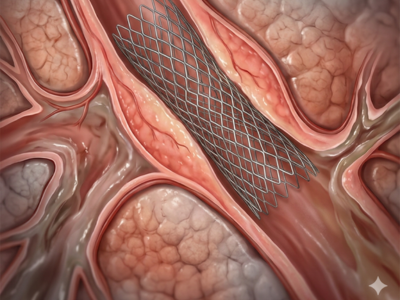
Airway stents are hollow tubular devices designed to keep narrowed or blocked airways open. Physicians place these devices inside the trachea or bronchi to restore airflow and support weakened airway walls. Once positioned, airway stents create a stable passage that allows air to move freely between the lungs and the external environment. Consequently, patients often experience immediate relief from breathing difficulties. In addition to improving airflow, airway stents help maintain airway structure and prevent collapse. Thus, airway stents can be considered an effective treatment method for cases of severe airway narrowing due to various medical conditions.
How Airway Stents Improve Breathing
Normal respiration requires open air passages that can supply adequate oxygen to the lungs. When an airway becomes blocked, airflow decreases, and oxygen delivery becomes compromised. The role played by an airway stent is to open up narrow passages. This allows easier access for air to flow into the lungs and increases oxygen transfer. Many patients notice immediate improvements in symptoms after stent placement. Furthermore, airway stents can reduce coughing, wheezing, and recurrent infections caused by impaired airflow. By restoring normal breathing patterns, these devices significantly enhance overall quality of life.
Types of Airway Stents
Several types of airway stents are available, allowing physicians to select the most appropriate option for each patient.
- Silicone Stents: Silicone stents are popular due to their flexibility, strength, and biocompatibility. Doctors can also move or extract them easily if needed. Silicone stents are also available in multiple designs according to the shape and size of the airway anatomy.
- Metallic Stents: Metallic stents are made of metal frames that can be expanded easily, providing robust support for the airway structure. They expand automatically after placement and retain their position inside the airways firmly. However, they are harder to remove compared to silicone stents.
- Hybrid Stents: Hybrid stents are a combination of both silicone and metallic types. In most cases, they include a metal frame covered by silicone or other polymers. Therefore, they ensure increased stability and reduce tissue growth around the airway stent.
The Airway Stent Placement Procedure
Interventional pulmonologists generally insert airway stents using a minimally invasive technique referred to as bronchoscopy. This technique avoids major surgery while providing effective treatment. During the procedure, patients receive anesthesia or sedation for comfort. The physician inserts a bronchoscope through the mouth or nose and advances it into the airway. Real-time visualization allows accurate identification of the obstructed region.
The selected stent is then delivered through the bronchoscope and carefully positioned within the narrowed airway. Once deployed, the stent expands and immediately restores airflow. Because bronchoscopy does not require surgical incisions, patients usually recover more quickly than those undergoing traditional surgical procedures.
Future Innovations in Airway Stents
Technological advancements continue to transform airway intervention procedures. Researchers are developing customized airway stents using advanced imaging systems, three-dimensional modeling, and 3D-printing technologies. These customized devices provide a more precise fit and may minimize the possible problems related to conventional stents. In addition, advances in technology in the future can also enhance the performance and comfort levels of patients with complicated airways. As personalized medicine continues to advance, customized airway stents may become an increasingly important component of respiratory care.
Emerging Outlook
Airway stents have transformed the management of airway obstruction, offering immediate and effective relief of breathing. These devices help patients with severe airway narrowing by restoring airflow, supporting weakened airways, and improving respiratory function. The growth of COPD, lung cancer, and other respiratory diseases keeps increasing the demand for advanced airway intervention. Hence, airway stents have become an integral part of the management of complex respiratory disorders. With advances in technology and more personalized solutions, airway stents will continue to improve patient outcomes and quality of life. These innovative medical devices offer a new path for people with problems with their breathing passages and help improve their health.