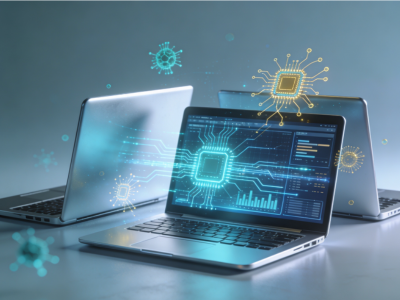

HP AI PCs are playing a major role in the company’s strong financial performance this year. The firm reported higher-than-expected revenue and profit due to rising demand for AI-powered PCs. This growth reflects broader trends in the AI PC market, where businesses are upgrading their systems. At the same time, Artificial Intelligence chip adoption continues to expand, boosting the Artificial Intelligence Chip Market. Businesses are looking at fast CPUs and intelligent machines to be able to carry out more complicated jobs, leading to an increase in the need for AI computers.
In the second quarter, HP posted a total revenue of $14.41 billion. This is 9% higher than last year’s results. It also beat its earnings-per-share estimate. Strong enterprise PC upgrades and growing premium PC demand drove this performance. Many organizations are replacing older systems due to the Windows 10 end-of-support deadline. As a result, the Windows 11 refresh cycle has become a key growth driver across the commercial PC market. Furthermore, the proportion of HP's intelligent PCs has also increased substantially in the shipment ratio. These systems have contributed approximately 44 percent of the total shipment ratio during the current period. It is clearly evident that there has been a considerable increase compared to the previous quarter, which was at around 35 percent. However, the company predicts that its shipments will go beyond 70 percent in the coming years.
However, the company also faces challenges linked to rising memory costs. A global memory chip shortage has increased prices for key components. This issue affects not only PCs but also smartphones and other electronics. Data center expansion has further tightened supply by consuming large volumes of memory chips. As a result, manufacturers are adjusting pricing strategies and focusing on high-margin PC categories. In the middle of this transformation, HP AI PCs remain central to the company’s business strategy. The firm has taken steps to manage costs and maintain profit margins. This includes optimizing the design of the products along with choosing affordable materials. However, this does not change the fact that the company still concentrates on building AI laptops and business laptops.
The demand for AI-driven productivity tools also supports this growth. Businesses now rely on generative AI PCs to handle complex tasks. These systems improve efficiency in areas such as data analysis and automation. Therefore, companies invest more in AI hardware ecosystem solutions. This trend strengthens the role of edge AI computing and intelligent devices in modern workplaces. Additionally, the broader PC hardware market is evolving with changing user needs. Hybrid work models require reliable and powerful computing solutions. The trend towards hybrid work necessitates strong computing systems that can handle the required processes. With more businesses upgrading their systems, AI station sales are also expected to see steady growth.
In the United States, this could potentially spur companies’ use of AI-assisted PCs. Companies might invest more in high-performance computers to compete effectively in the market. This will enhance efficiency and encourage innovations in various industries. It will also lead to increased demand for next-generation computers in the corporate and consumer markets. The rise of HP AI PCs also impacts the Cloud Semiconductor Memory Market. Higher demand for AI-enabled systems increases the need for advanced memory chips. This trend encourages investment in semiconductor manufacturing and innovation. At the same time, it drives expansion in the Wi-Fi chipset and memory supply ecosystem.
The usage of Artificial Intelligence chips is increasing because companies are depending on the advanced hardware required to perform artificial intelligence functions. Businesses are investing in fast and effective processing capabilities in order to process big data workloads. HP AI PCs represent a major shift in the future of computing. The company’s strong results highlight growing demand for AI-powered devices and enterprise upgrades. As the market evolves, HP AI PCs will continue to shape the next phase of the PC industry and drive innovation in intelligent computing solutions.